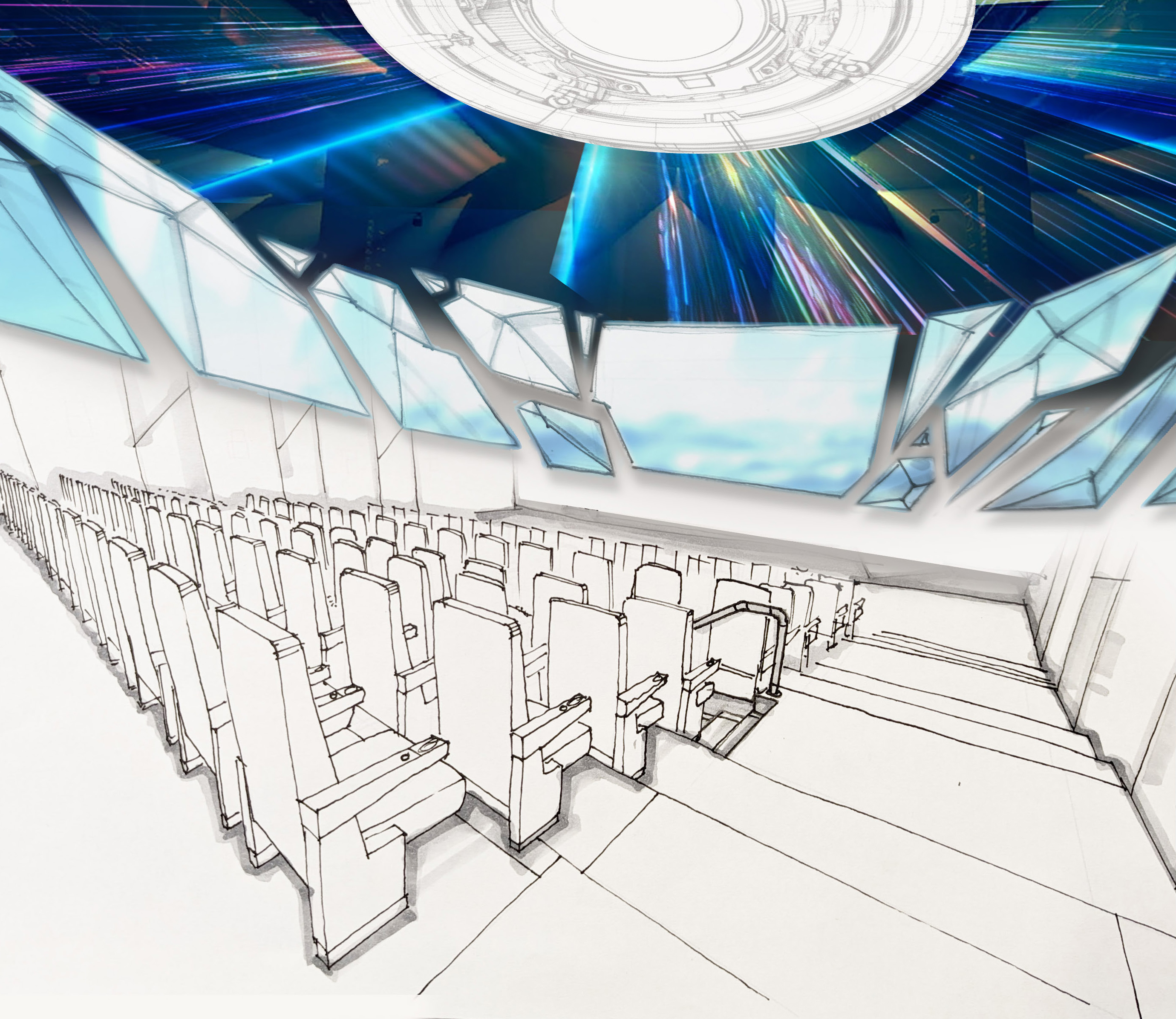
Atlas9 set out to create an original, story-driven immersive attraction unlike anything else in the Kansas City market — a fully realized operational environment where the concept of movies escaping the screen became the animating idea. The challenge was translating that ambitious premise into interactive systems, player progressions, and physical environments that would work at scale for a general public audience, day after day.
I contributed to the early concept, gamification strategy, and interaction design of Atlas9 — working alongside designers, engineers, technologists, and fabrication teams to define the interactive mechanics, player progression systems, and narrative structure that would underpin the full experience.
A key early focus was defining the "movies escaping the screen" concept in concrete, buildable terms: how guests would enter and move through the world, how they would engage with the story, and how the technology would serve the narrative rather than overshadow it. I supported early-stage user testing and prototyping to evaluate gameplay flow, interaction clarity, and engagement pacing — and helped refine gamified systems including RFID-based guest tracking, state-based interactions, dynamic media, projection, adaptive lighting, and tactile interfaces. I also partnered with select artists to help establish a cohesive visual language that reinforced gameplay clarity, world-building, and intuitive player feedback.


Atlas9 opened as one of Kansas City's most ambitious entertainment destinations — a 46,000-square-foot immersive world built with support from Quixotic, Swell Spark, and the State of Kansas. The early conceptual and gamification work contributed to a guest experience that is both story-rich and operationally robust, designed to sustain repeat visits through evolving gameplay and genuine world-building depth.
The project stands as an example of what's possible when experience design, technology integration, and narrative ambition are aligned from the earliest stages of development.


